
Chimney Leak Repair in the USA
Chimney leaks begin when water crosses the roof plane at the masonry stack. Top Notch Matthews Roofing technicians start at the ceiling stain and follow the path upward along rafters to the point where flashing meets brick or where mortar has opened.
Common entry points include step flashing that has pulled away, crown cracks that let water into the flue, and deteriorated sealant around the counter flashing. Our crews measure gaps and note water travel routes before selecting the repair sequence. Before technicians arrive, clear debris from gutters as Top Notch Matthews Roofing prepares to handle chimney leak repair throughout the USA.
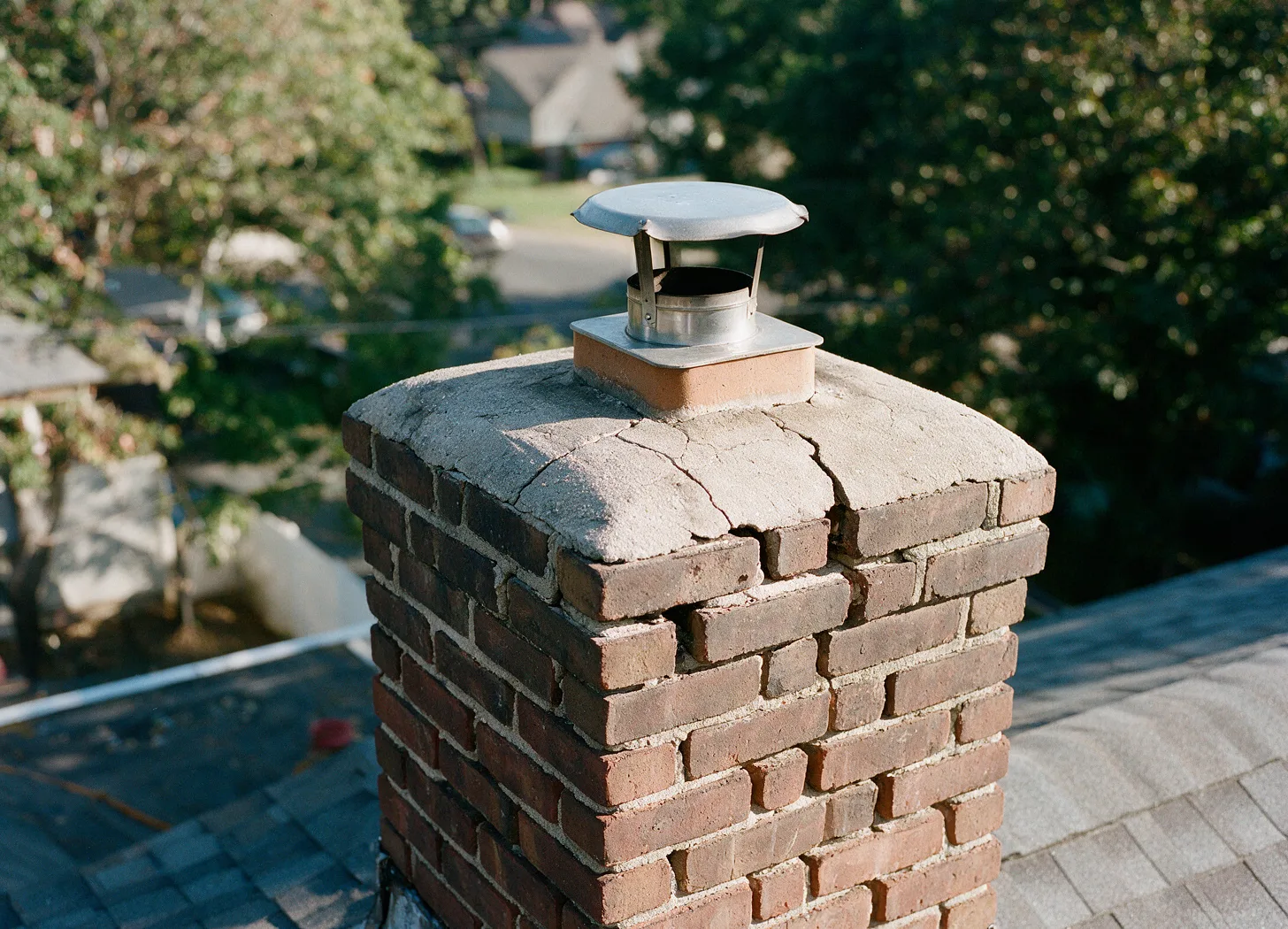
Visible Indicators of Chimney Water Entry
- Brown stains spreading from the chimney chase on the ceiling
- Damp odor in the attic directly beside the masonry stack
- White efflorescence on interior brick near the roof line
- Soft or darkened spots on ceiling drywall after heavy rain
- Mold growth on rafters where water follows the chimney
Tracing Water Movement from Stain to Source
Technicians begin inside the attic. They mark the stain location then climb to the roof to examine the chimney base. Water often travels several feet along the decking before it drips, so the entry point is rarely directly above the mark.
Next they check the cricket or saddle behind the stack for debris buildup. Blocked drainage here forces water under the step flashing and down the rafters to the ceiling.
Finally they inspect the chimney crown for hairline cracks and the flue liner for gaps that allow condensation to escape.
Flashing and Mortar Joint Inspection Details
Our technicians lift the counter flashing to measure how far the step flashing extends under the shingles. They check for rust holes and loose nails that allow water to bypass the overlap.
Mortar joints are probed with a thin tool to locate open head joints. Water follows these vertical channels and exits at the roof line weeks after the rain stops.
They also verify that the apron flashing at the front of the chimney sits tight against the brick and that no sealant has peeled away from temperature cycles.
Repair Sequence and Component Replacement
When flashing has failed, crews remove the surrounding shingles, install new copper or stainless step flashing, and weave it correctly into the existing courses. The counter flashing is then re-secured into a fresh reglet cut in the brick.
Open mortar joints receive new tuck pointing with the correct lime-sand mix. The crown is either repaired with a slope-correcting parge coat or replaced with a pre-cast concrete unit that includes a drip edge.
Where the chimney cap is missing or cracked, a new stone or concrete cap is set with flashing tape underneath to direct water away from the flue opening.
Materials Used in Permanent Chimney Sealing
Top Notch Matthews Roofing selects 16-ounce copper or 24-gauge stainless flashing for longevity against thermal movement. Lead wedges secure the counter flashing without relying solely on sealant.
High-temperature silicone sealant is applied only at the top edge of counter flashing, never as the primary barrier. Mortar color is matched to the existing brick so the repair blends visually.
Rafters that show water staining receive a borate treatment to inhibit future mold before the ceiling is closed.
Chimney Leak Repair questions
How does water travel from the chimney to the ceiling?
Water enters at cracked flashing or open mortar, then follows the roof decking and rafters for several feet before dripping onto the ceiling drywall. The stain often appears offset from the actual entry point.
What should a homeowner check before calling for service?
Note the exact location of any ceiling stain relative to the chimney and observe whether the mark grows after rainfall. Check the attic for wet rafters or insulation without entering the chimney area itself.
Can sealant alone stop a chimney leak?
Sealant is used only as a secondary measure. The primary fix requires proper flashing overlaps and mortar repair so water cannot reach the sealant joint in the first place.
When is full flashing replacement needed?
Replacement is required when step flashing shows rust holes, has pulled away from the decking, or when the counter flashing reglet has widened beyond the point where re-sealing will hold.
Schedule Chimney Leak Repair
Contact Top Notch Matthews Roofing to inspect chimney flashing and mortar before water reaches the ceiling.