
Flat Roof Repair in the USA
Top Notch Matthews Roofing handles Flat Roof Repair across the USA by following water from interior ceiling marks upward. Technicians measure deck slope first, then locate where water crosses failed seams or blocked drains before it reaches rafters.
Our crews examine the membrane surface for blisters, splits and open laps. They check how water moves along the insulation layers and exits through scuppers or interior drains to identify the exact entry point. Flat roof repair involves checking boot seals and step flashing where Top Notch Matthews Roofing operates in every part of the USA.
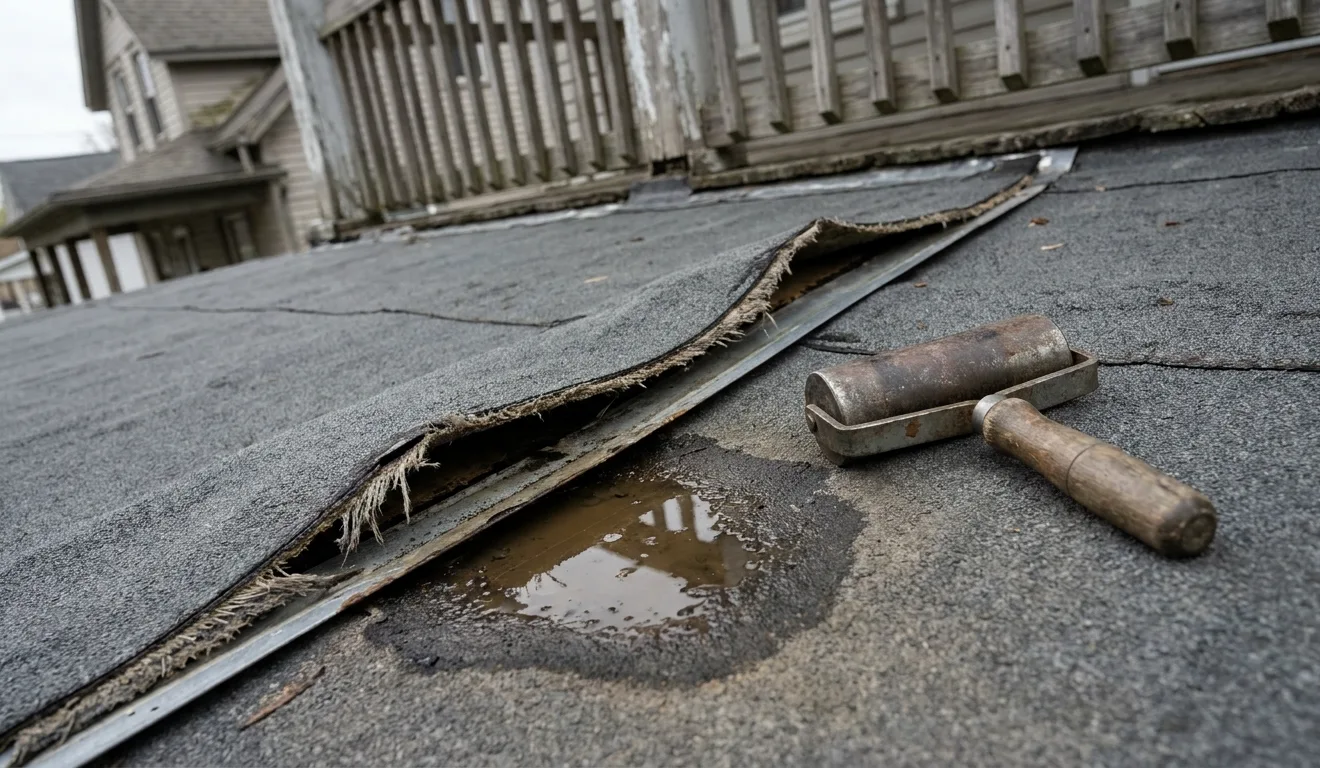
Visible Indicators on Flat Roof Systems
- Dark stains spread along ceiling drywall edges
- Bubbles form under the membrane surface after rain
- Water collects in low spots hours after storms end
- White chalk lines appear where seams have opened
- Drips occur near roof drains during light showers
Following Water Travel on Flat Decks
Technicians start at the interior stain and track moisture movement along the underside of the decking. Water often travels laterally across plywood or OSB before it drops at a seam or fastener line.
They lift insulation boards near suspected entry points to see if water has saturated the layers below the membrane. This step shows how far the leak has spread from the initial breach.
Next the crew measures the distance from the stain projection to the nearest penetration such as a vent or drain to narrow the search area on the roof surface.
Inspection Steps at Key Flat Roof Details
Our technicians probe all field seams with a blunt tool to detect gaps where water can enter. They check the condition of the perimeter flashing where the membrane meets parapet walls.
They clear debris from drains and scuppers then run water across the surface to observe flow direction. Slope readings are recorded at multiple points to confirm whether ponding exceeds acceptable depth.
Every penetration receives close attention including pipe boots, skylight curbs and HVAC curbs. Fastener heads are examined for backing out that creates small water paths through the membrane.
Repair Choices for Membrane Damage
Small tears receive a reinforced patch that extends past the damaged area on all sides. The patch is heat welded or adhered according to the existing membrane type to restore a continuous seal.
When seams have separated over longer distances technicians cut out the failed section and install a new strip of matching membrane. The new strip overlaps the existing material by the manufacturer recommended distance.
For widespread surface cracking the affected area may require a full overlay membrane that ties into the remaining sound sections at the perimeter and around all penetrations.
Materials and First Steps for Homeowners
Common repair materials include EPDM sheets for rubber systems, TPO or PVC rolls for thermoplastic membranes and compatible flashing tapes for terminations. Each material matches the original roof type to avoid chemical incompatibility.
Technicians carry preformed boots for round penetrations and pre-cut corner pieces for inside and outside angles. These parts reduce field cuts and improve seal consistency around irregular shapes.
Homeowners should place a bucket under active drips and note the exact location of ceiling marks relative to roof penetrations. They should avoid walking on the roof surface until the crew arrives.
Flat Roof Repair questions
How do technicians find the leak on a flat roof?
They begin at the interior stain and trace water movement along decking and rafters. Measurements of slope and flow tests at drains reveal where water ponds and enters through open seams or damaged flashings.
What parts are replaced during Flat Roof Repair?
Damaged membrane sections, failed pipe boots, deteriorated flashing strips and clogged drain components are replaced. New material overlaps existing membrane by required distances and is sealed at all edges.
Can a homeowner check anything safely before the crew arrives?
They can mark the stain location on the ceiling and note nearby roof penetrations visible from the ground. No roof access is needed until technicians perform the full inspection.
What membrane types does Top Notch Matthews Roofing work on?
Crews repair EPDM, TPO, PVC and modified bitumen systems. Each repair uses compatible patches or overlay sheets that match the original membrane composition and attachment method.
Schedule Flat Roof Repair
Contact Top Notch Matthews Roofing to inspect flat roof conditions and restore drainage paths across the USA.