
Roof Vent and Boot Repair in the USA
Top Notch Matthews Roofing sends technicians to examine roof vents and pipe boots first. They start at any interior ceiling stain and follow the water path upward. The goal is to locate the exact boot or seam where water enters before it spreads along the decking.
Vents allow attic airflow while boots seal around pipes. When sealant cracks or the boot tears, rain follows the rafter downward. Our crews measure the gap at each boot base and check the metal flashing overlap to confirm the entry point. Mapping leak origins along roof planes precedes any roof vent and boot repair performed by Top Notch Matthews Roofing in the USA.
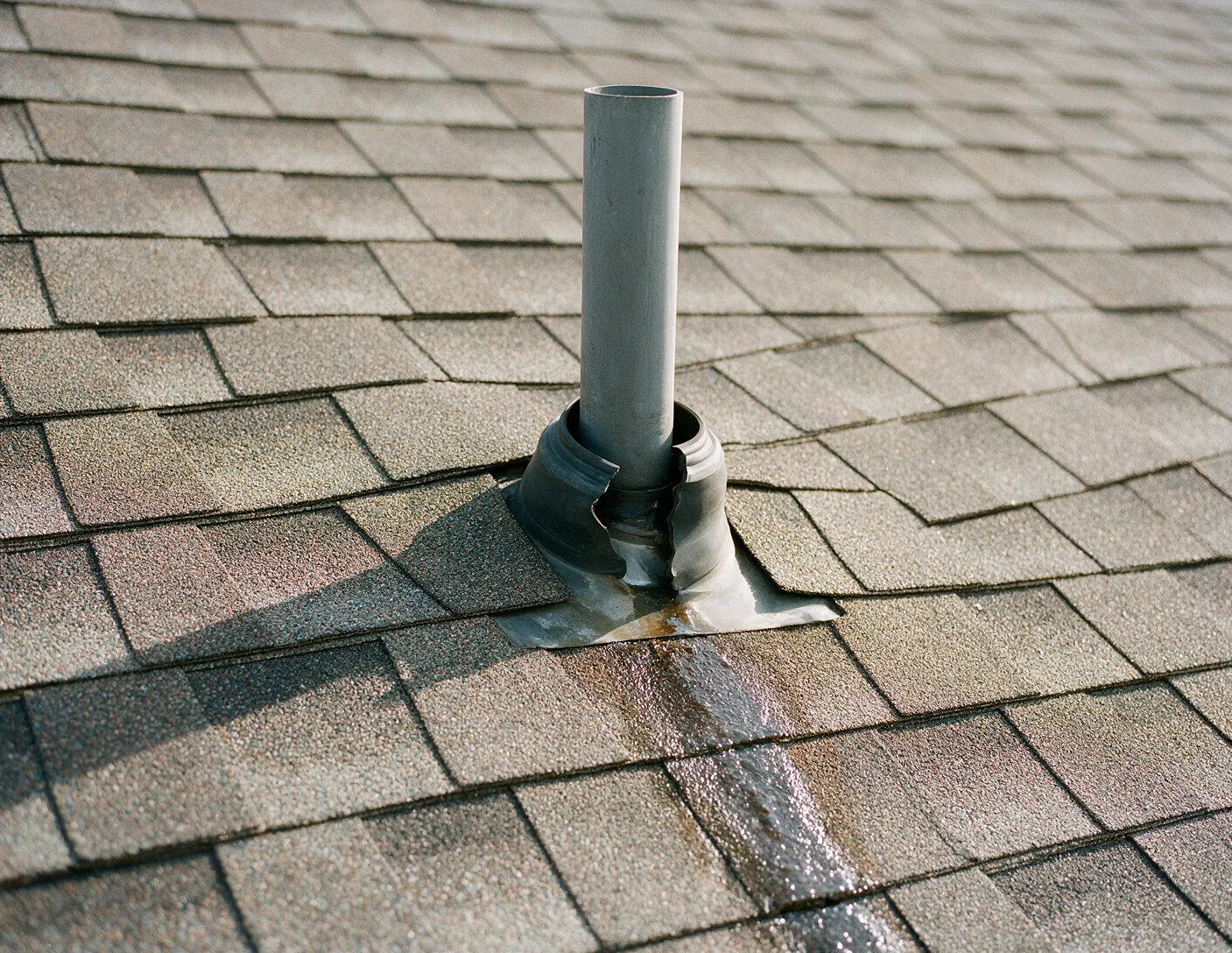
Visible Indicators of Boot or Vent Leakage
- Ceiling stains form directly below plumbing vents after rain.
- Attic insulation shows dark streaks along rafters near vent pipes.
- Rubber boot edges lift or split around pipe penetrations.
- Water drips from vent flanges during wind-driven storms.
- Mold appears on decking within two feet of a vent base.
Common Causes at Vent Boots and Seams
Asphalt shingles expand and contract around vent openings. This movement pulls the sealant away from the boot collar. Once the seal breaks, water travels under the shingle course and follows the rafter to the nearest low point.
Ultraviolet light hardens the original rubber boot until it splits at the pipe contact line. Technicians measure the split length and note whether the boot still grips the pipe or has lifted more than one eighth of an inch.
Flashing panels at the uphill side of a vent can corrode at the nail line. Water then runs under the panel and exits at the downhill edge, creating a stain several feet from the visible vent.
Technician Inspection Steps
Our technicians begin inside the attic. They mark every rafter that shows moisture discoloration and trace it upward to the underside of the decking. They record the distance from each mark to the nearest vent or pipe penetration.
On the roof they remove loose granules around the boot and probe the sealant with a putty knife. They measure the clearance between the boot flange and the shingle surface to decide whether a new boot or full flashing rebuild is required.
They also check the vent cap itself for missing screws and test whether the cap spins freely. A loose cap allows wind-driven rain to enter the vent pipe and drip inside the attic even when the boot remains intact.
Repair and Replacement Options
Technicians install a new EPDM boot when only the collar has split. The old boot is cut away, the pipe is cleaned to bare metal, and the new boot is slid down and sealed with butyl tape under the flange before nailing.
When flashing has corroded or the decking is soft, crews replace the entire step flashing assembly. They lift the surrounding shingles, install new metal pans that overlap by at least two inches, and secure them with ring-shank nails set in sealant.
For flat roof sections around curb vents, technicians apply a new layer of modified bitumen membrane that extends six inches beyond the vent base. They torch the seams and roll the material to remove all air pockets before trimming the edges.
What Homeowners Should Do First
Place a bucket under any active drip and note the exact ceiling location relative to the nearest bathroom or kitchen vent. Photograph the stain and the roof area above it from a safe ladder position without walking on the shingles.
Turn off attic lights and look for pinpoints of daylight around vent pipes during daylight hours. Mark those spots with tape on the rafters so technicians can locate them quickly once they arrive.
Avoid spraying water from a garden hose onto the roof. This can force additional moisture into decking seams and widen the damage path before Top Notch Matthews Roofing arrives to perform the repair.
Roof Vent and Boot Repair questions
How do technicians confirm water enters at the boot rather than the vent cap?
They mark rafter stains inside the attic and measure upward to the decking. They then remove the vent cap on the roof and inspect for standing water inside the pipe. If the pipe interior is dry but the boot flange shows gaps, the boot is the source.
What material replaces a split rubber boot?
Technicians use a molded EPDM boot sized to the pipe diameter. They slide it over the pipe, press butyl tape under the flange, and nail through the flange into the decking. The surrounding shingles are then woven back over the flange edges.
Can a leaking vent boot be sealed without replacing the boot?
Only when the split is shorter than one quarter inch and the boot still grips the pipe. Technicians clean the area, apply a compatible sealant around the split, and press a small piece of self-adhesive flashing over the repair for reinforcement.
What happens if water has already reached the ceiling drywall?
The crew stops the roof leak first. They then advise the homeowner to cut out the affected drywall section from below after the roof is dry. This prevents hidden mold growth between the ceiling and the decking.
Request Roof Vent and Boot Repair
Contact Top Notch Matthews Roofing to schedule an inspection of roof vents and pipe boots across the USA.