
Storm Damage Repair in the USA
High winds slide under shingle tabs and tear them free while driving rain along the decking grain toward the nearest seam or nail hole. Hail fractures the surface granules and compresses the mat so water pools instead of shedding. Our technicians begin every Storm Damage Repair job by walking the slope in straight lines and noting every displaced or cracked shingle before opening the attic.
Once inside the attic our technicians shine lights along rafter bays to find dark streaks on the sheathing that indicate water travel from the ridge downward. They probe soft spots with an awl to measure how far moisture has reached into the plywood. This mapping tells exactly which sections need new underlayment and which can be dried and salvaged during repair. Homeowners examine attic insulation for damp spots leading to calls for storm damage repair by Top Notch Matthews Roofing in the USA.
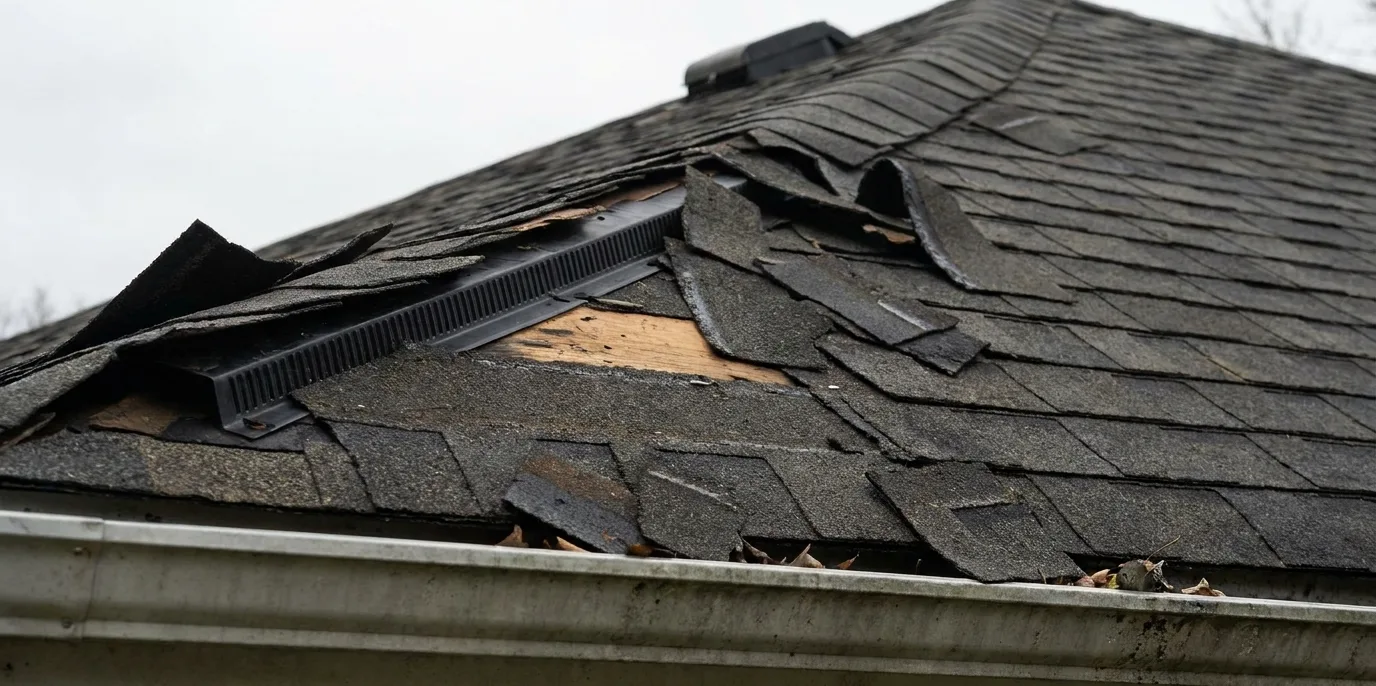
Visible Indicators After Storms
- Shingles missing or lifted at the corners and ridges
- Small circular dents scattered across the slope surface
- Dark water lines running down interior ceiling corners
- Granule piles in gutters after heavy rain events
- Daylight visible through attic sheathing gaps
Wind Uplift Inspection Points
Our technicians check every eave and rake edge first because wind starts its work there. They lift each shingle tab gently to inspect the seal strip condition and look for pulled nails. When tabs stay raised the underlayment below usually shows creases where water has already traveled inward along the slope.
Next they examine ridge cap shingles and any exposed fasteners. Loose ridge pieces allow wind driven rain to enter the attic directly. Technicians record the number and location of compromised caps so replacement pieces match the existing shingle profile and color during the repair.
Hail Damage Assessment Steps
Hail strikes leave distinct patterns that our technicians measure with a small gauge. They count dents per square and note whether the mat is crushed or only the granules are missing. Crushed areas require full shingle replacement because water will sit in the depression and migrate to the nail line.
Technicians also inspect metal flashings and vent boots because hail often bends these softer materials. A dented boot no longer seals around the pipe and becomes a steady drip point. They replace the entire boot assembly rather than patching so the new piece sits flat and sheds water outward.
Tracing Water Travel Paths
Water follows the decking grain and rafter edges rather than falling straight down. Our technicians mark every stain on the ceiling then go to the corresponding roof section directly above. They remove a single shingle at the upper end of the stain to confirm the entry point before deciding on partial or full slope repair.
They also check valley metal and step flashing because storm debris often collects there and holds moisture against the shingles. When metal is displaced the water runs behind the wall sheathing instead of over the roof surface. Technicians resecure or replace these pieces during the same visit to stop hidden migration.
Repair Materials and Methods
We install new shingles that match the existing weight and exposure so the repaired area blends with the remaining roof. Technicians hand seal each tab in the replacement zone with a bead of compatible sealant placed above the nail line. This prevents future wind from repeating the same failure.
For damaged boots and flashings we use preformed pieces sized to the pipe diameter. The new boot sits over fresh underlayment and is nailed through the flange only. Excess sealant is avoided because it can trap debris and create new leak paths after the next storm.
Storm Damage Repair questions
How do you locate the exact leak after a storm?
Our technicians start at the ceiling stain and work upward along rafter lines to the roof surface. They lift shingles at the upper edge of the water path and inspect the underlayment for tears or pulled nails. Every entry point is marked before any material is removed.
What happens to hail crushed shingles?
Crushed shingles lose their ability to shed water because the mat no longer expands after impact. We remove the full course around each damaged area and replace it with matching material. The surrounding intact shingles stay in place to preserve the original water shed pattern.
Do you check attic conditions during every visit?
Yes. We examine rafter bays and sheathing for moisture streaks and soft spots after every storm call. This step reveals how far water has traveled beyond the visible roof damage so the repair covers the complete affected zone.
What should a homeowner document before we arrive?
Photograph missing shingles, dents, and interior stains from a safe distance. Note the date and time of the storm. Avoid walking the roof or attempting temporary patches that could mask the original damage points our technicians need to trace.
Request Storm Damage Repair
Contact Top Notch Matthews Roofing to schedule a full inspection of storm affected areas across the USA.